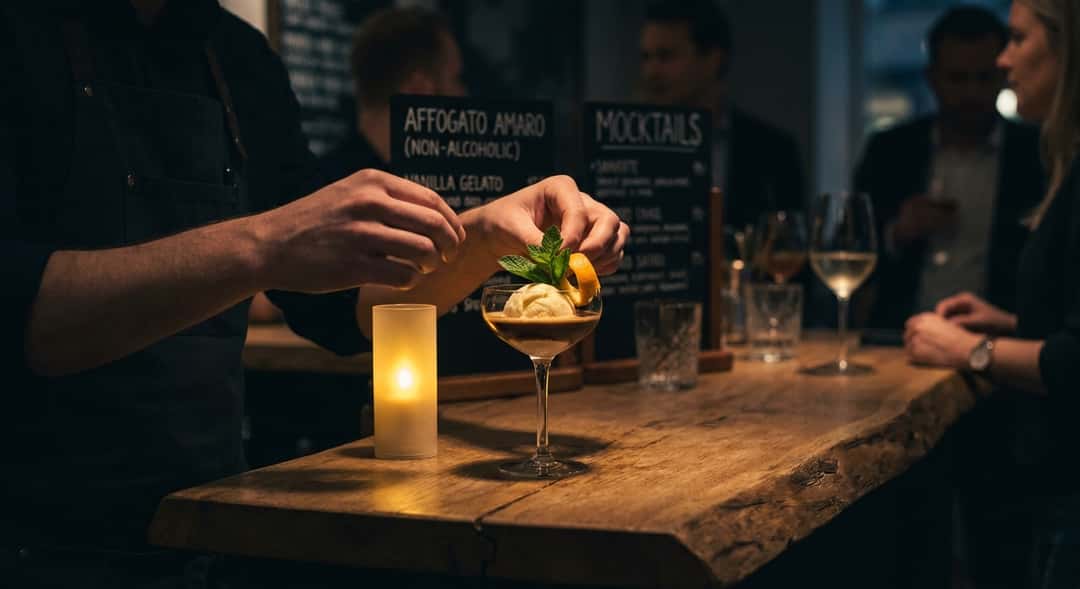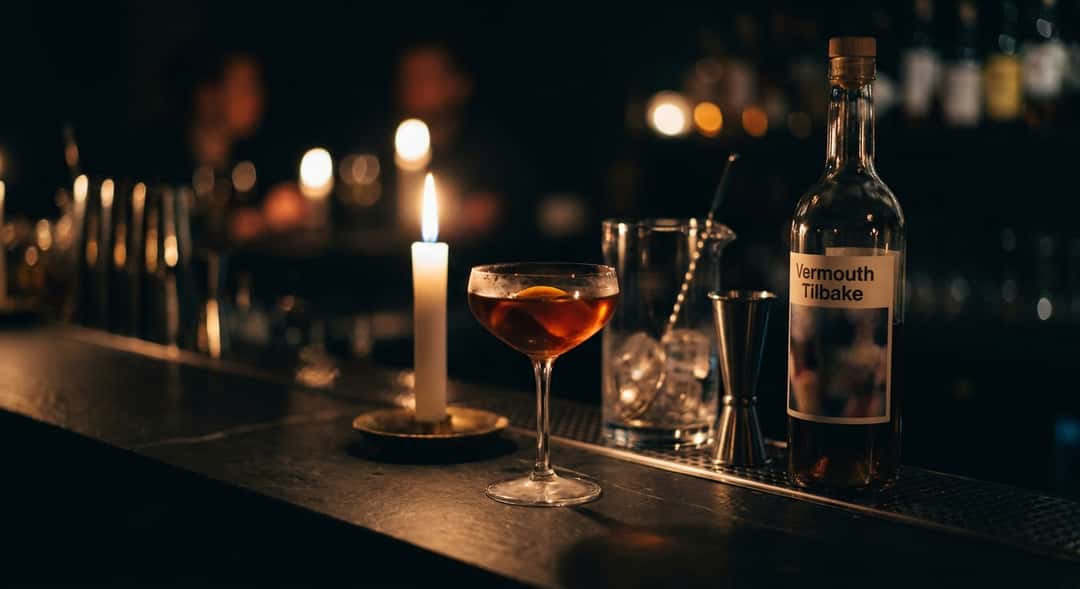

There is an old photograph from a café in Turin, taken sometime in the 1920s: a man in a white shirt leans over the bar counter with a glass of red, gleaming liquid in front of him. No rush. Just the man and the glass. That is vermouth. And that is how it was – vermouth was not something you had in a drink. It was the drink.
Then came the long era of forgetting. Vermouth became the dusty bottle behind the bar, the one you poured a small splash of into a Martini without really thinking about what it was. Bartenders learned to "rinse the glass" with dry vermouth and pour the rest away. Quality became unimportant, because nobody was really drinking it anymore.
But something has happened. And it is happening right now.
From botanical herb to glass
Vermouth is an aromatised wine – a base wine, most often white wine, with added alcohol, sugar, and a broad spectrum of botanicals: wormwood (wermut in German, hence the name), cardamom, coriander, citrus peel, red clover, cloves, and dozens of other herbs and roots depending on the producer. Wormwood is the common thread, but it is the balance between bitter compounds, sweetness, and tartness that determines the character.
There are three main styles to know:
- Dry (dry/extra dry): Low sugar, fresh and almost wine-like. Classic in a Martini. Chambéry in France is the heartland of this style.
- Sweet (rosso/rouge): Rich, caramel-like, with deep herbal complexity. Turin – Vermouth di Torino – is the holy city.
- Bianco/blanc: A middle ground. Sweeter than dry, but lighter in colour than rosso. Floral, vanilla-tinged, and very approachable.
It is easy to understand why tourists in Turin drink vermouth at three in the afternoon with ice and orange peel. It is fresh, complex, and not too heavy – exactly what you need when the spring sun starts to warm things up.

Turin and Chambéry: two schools, one passion
When talking about sweet vermouth, it is impossible to overlook Cocchi Vermouth di Torino. The house was founded in 1891 by Giulio Cocchi in Asti, Piedmont, and despite production passing through various hands over the decades, the character has remained surprisingly true to its origins: a deep, rich rosso with notes of cocoa, bitter citrus peel, and a distinct bitterness of cinchona bark in the finish. This is one of the reasons bartenders around the world began rediscovering Cocchi in the early 2000s – it has exactly the depth that elevates a Negroni from good to unforgettable.
For those who want to explore the French line, Dolin Vermouth de Chambéry Dry is a natural starting point. Dolin is one of the oldest producers in the Chambéry region of Savoy, and their dry variant is lighter and more delicate than most, with a fresh herbal quality reminiscent of alpine meadows. This is not a random image: Chambéry lies in the Savoy Alps, and the botanicals in the local vermouths bear the mark of this terroir in a way that is difficult to imitate elsewhere.

But the world of vermouth does not end in Italy and France. Lustau Vermut Red from Jerez in Spain shows that the sherry tradition and the art of vermouth can merge into something of their own: here the base wine is solera-aged sherry, and the result is a warm, nutty, and honeyed vermouth style that is more wine-like than most. It is perfect for what the Spanish call vermut hour – tapas and a cold glass in the middle of the day, ideally with a few olives on the side.
Cold vermouth over ice – here is how
The simple is often the best, and few things prove it as clearly as a glass of vermouth over ice. The method is almost embarrassingly straightforward:
Ingredients
- 6–8 cl sweet or bianco vermouth
- Large ice cubes
- 1 strip of orange peel
- Optional: a splash of sparkling water
Method
- Fill a low rocks glass with large ice cubes.
- Pour the vermouth over the ice.
- Press a strip of orange peel over the glass so that the aromatic oils are released, and drop it in.
- Add a splash of sparkling water if you want it a little lighter.
- Serve immediately.
Variation: Use a green olive instead of orange if you are using dry vermouth – it gives a more saline-mineral, almost Martini-like note that works excellently as an aperitif.

The key is the quality of the ice and the quality of the vermouth. And here comes a rule of thumb most people do not know: vermouth is a perishable product. An opened bottle should be kept in the refrigerator and consumed within three to four weeks. This is where many people have formed a poor impression of vermouth – the bottle that has been sitting at room temperature since Christmas does not taste the way it should. Better to buy a small bottle and drink it up.
The cocktail base that elevates everything
In the world of cocktails, vermouth is not a flavouring agent – it is a co-creator. The classic Martini (gin and dry vermouth), Negroni (gin, sweet vermouth, and Campari), and Manhattan (whisky and sweet vermouth) are all built on an idea of balance between strong, tart, and herbal. Remove the vermouth, and you are left with something flat and one-dimensional.
A good sweet vermouth in a Negroni – say Cocchi, or a more herb-forward variant such as Quaglia Berto Vermouth di Torino Rosso – adds a complexity you cannot replicate with sugar and bitters alone. Quaglia Berto is a producer with roots in Canelli in Piedmont, and their rosso is known for being botanically rich with clear notes of vanilla, ripe cherries, and an herbal bitterness that holds up well in ice-based cocktails. It is a vermouth that can stand up to being tasted on its own, but that is also a dream partner for gin.
For those who want to explore something a little unconventional: Discarded Sweet Cascara Vermouth from Scotland is made from coffee cherry extract – the fruit flesh that is normally discarded in coffee production – and delivers a vinous, lightly smoky, coffee-inspired vermouth experience. It is a producer that thinks outside the box, and the result is a vermouth that works surprisingly well in simple drinks with soda water and a slice of orange.
Why right now?
Spring is a good time to discover – or rediscover – vermouth. It suits the season: fresh, botanical, not too heavy. Aperitif culture is flourishing in Norwegian cities, and more and more bars are putting vermouth on the map as a standalone drink rather than a cocktail seasoning. It is a drink that invites you to slow down a little, to sit outside with a glass as the evening draws near.
There is a reason the man in the old Turin photograph looked so relaxed. He knew something we are in the process of relearning: that a good glass of vermouth is more than enough.
Four vermouths to know
| Vermouth | Style | Character |
|---|---|---|
| Cocchi Vermouth di Torino | Sweet (rosso) | Cocoa, cinchona bark, citrus |
| Dolin Vermouth de Chambéry Dry | Dry | Fresh, alpine, delicate |
| Lustau Vermut Red | Sweet, sherry-based | Nutty, honey, warm |
| Quaglia Berto Vermouth di Torino Rosso | Sweet (rosso) | Vanilla, cherry, herbs |