
There is something almost paradoxical about pouring beer into a cake tin. The liquid is dark, bitter, smells of burnt malt and caramel – nothing you would intuitively associate with sweet baking. But that is exactly why it works.
I started experimenting with beer in baked goods a few years back, when I had a half-drunk bottle of imperial stout sitting in the fridge. It was about to be thrown out, but the smell – that deep, almost syrup-like aroma of roasted malt – made me think: what if this complexity could lift a chocolate cake? The answer was yes. More than yes, actually. The cake turned out moister, darker, with a depth that neither milk nor water could have given it.
Dark beer – particularly stout and porter – has a natural sweetness from the malt, a gentle bitterness that balances sugar, and a fullness that works almost like an extra flavor layer in the batter. When you heat it, the carbonation evaporates and leaves behind a concentrated essence of roasted grain, caramel, coffee, sometimes hints of vanilla or chocolate. It is like adding a layer of umami to the dessert.
Here are three recipes where the beer flavor actually plays the starring role – not just along for the ride.
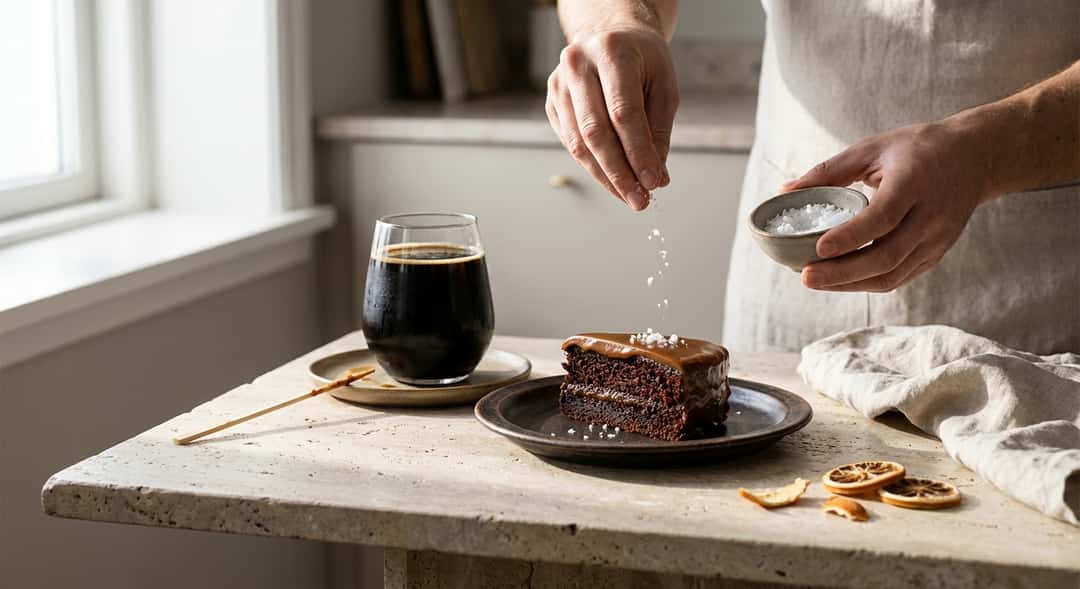
Chocolate stout cake with salted caramel glaze
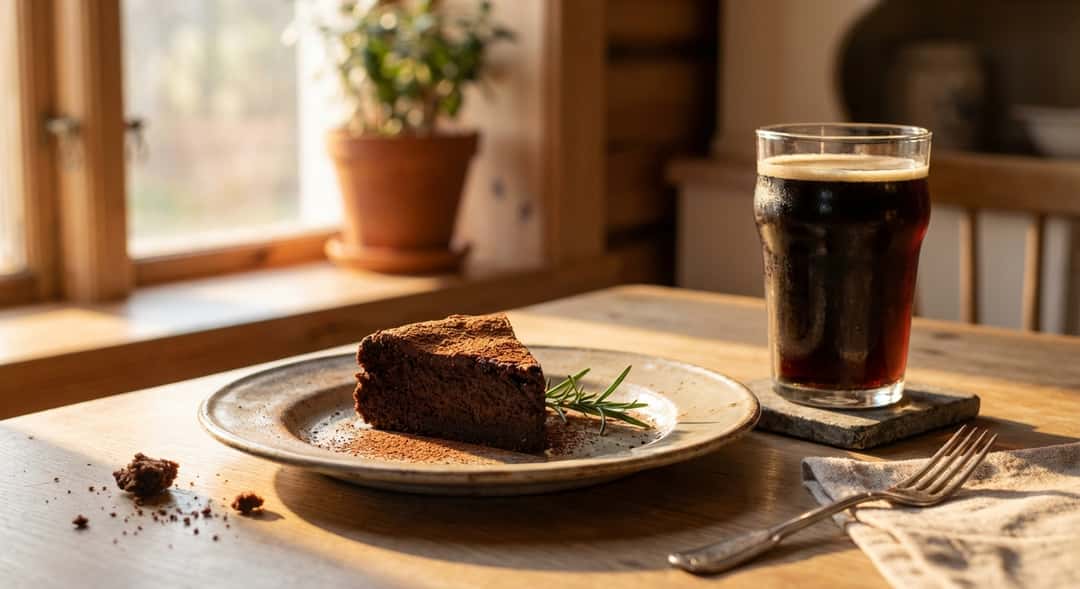
This is the classic. Dark, moist, almost brownie-like in texture, but with a complexity that makes guests ask what the secret is. Imperial stout is ideal here – the high alcohol content and the rich malt profile give the cake both depth and moisture. Amundsen Barrel Aged Upside Down Christmas Cake Pastry Stout is a wonderful choice if you want extra layers of spice and barrel character, but any robust stout will do.
Ingredients
For a roughly 24 cm springform tin:
- 200 g butter
- 200 ml imperial stout (8–12%)
- 75 g cocoa (good quality, unsweetened)
- 200 g plain flour
- 300 g sugar
- 1 tsp baking powder
- ½ tsp salt
- 2 eggs
- 100 ml sour cream
For the glaze:
- 100 g sugar
- 50 g butter
- 100 ml cream
- 1 tsp flaky salt
Method
- Preheat the oven to 180°C. Grease the tin well.
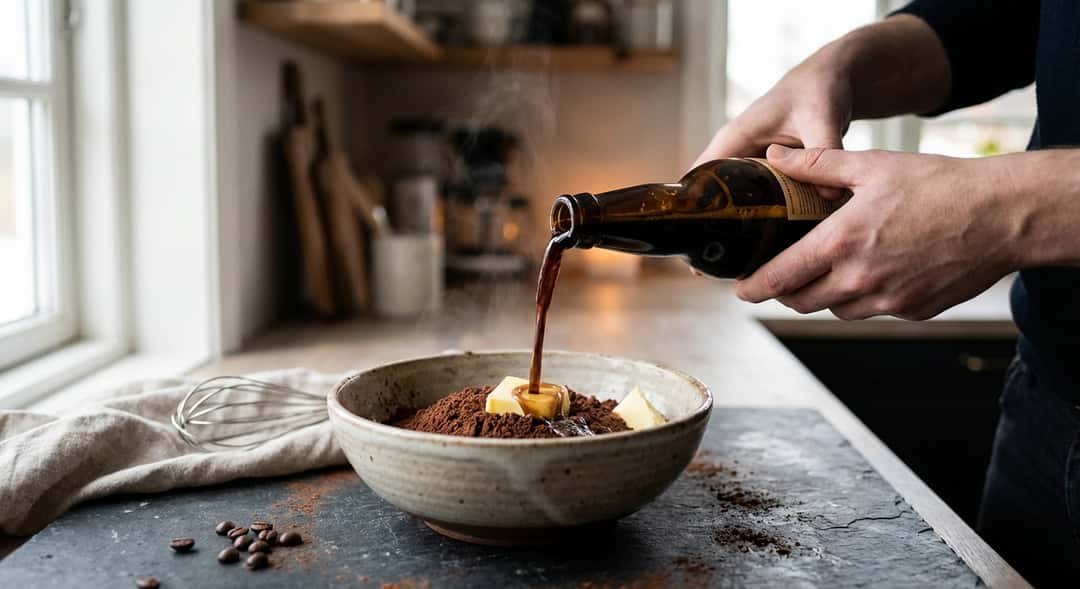
- Melt the butter and beer together in a saucepan over medium heat. Stir in the cocoa until the mixture is smooth. Allow to cool for a few minutes.
- Mix the flour, sugar, baking powder and salt in a large bowl.
- Whisk the eggs and sour cream together in a separate bowl.
- Pour the beer mixture over the dry ingredients, stir gently, then add the egg mixture. Do not overmix – the batter should be thin and slightly lumpy.
- Pour into the tin and bake in the middle of the oven for approximately 45–50 minutes. The cake is done when it has pulled away slightly from the edges and a skewer comes out almost clean.
- Allow the cake to cool completely before glazing.
- Make the glaze: Melt the sugar in a dry pan until golden. Stir in the butter (watch out for splattering!), then the cream. Cook for 2–3 minutes until thickened. Add the salt. Let the glaze set slightly before pouring over the cake.
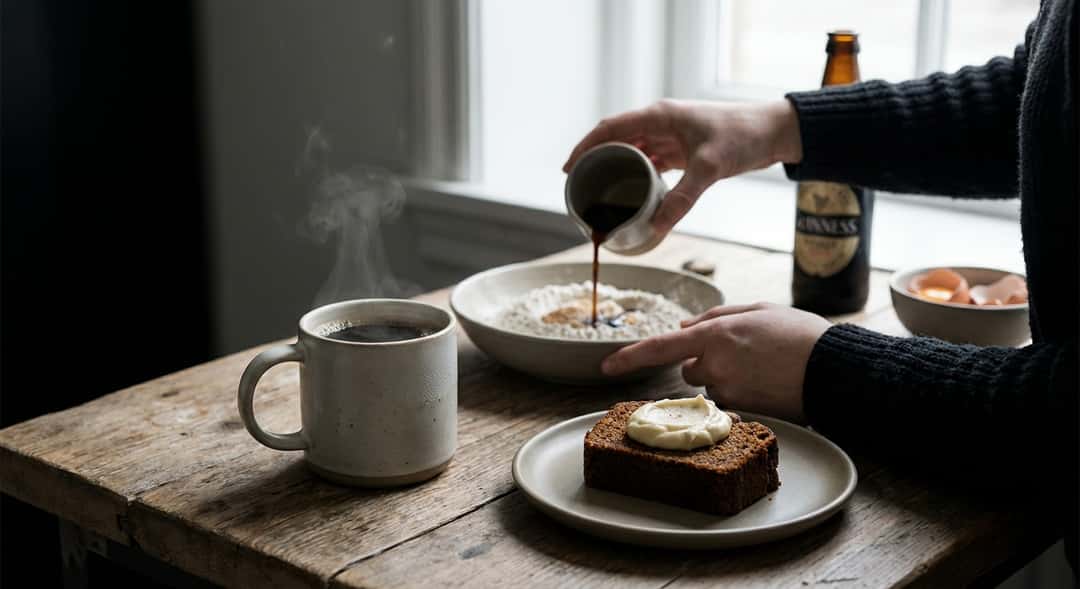
Spice cake with Belgian dubbel and cream cheese frosting
Here we swap the stout for a Belgian dubbel – a dark, malt-forward beer with notes of raisins, caramel and winter spices. This combination produces a spice cake that is moist, aromatic and perfect alongside a winter-holiday coffee at the cabin. Belgian dubbel often has a touch of sweetness and fruitiness that lifts ginger and clove in a way that dark stout does not.
Ingredients
For approximately a 1.5-litre cake tin:
- 250 ml Belgian dubbel (6–8%)
- 150 g butter
- 200 g dark syrup
- 200 g sugar
- 300 g plain flour
- 2 tsp baking powder
- 2 tsp ground ginger
- 1 tsp cinnamon
- ½ tsp cloves
- ½ tsp cardamom
- 2 eggs
For the cream cheese frosting:
- 200 g cream cheese (plain)
- 50 g butter, at room temperature
- 150 g icing sugar
- 1 tsp vanilla extract
Method
- Preheat the oven to 175°C. Grease and flour the tin.
- Warm the beer, butter, syrup and sugar in a saucepan until the butter has melted. Do not boil. Allow to cool to lukewarm.
- Mix the flour, baking powder and spices in a bowl.
- Lightly whisk the eggs and stir them into the beer mixture.
- Pour the liquid over the dry ingredients and stir to a smooth, thin batter.
- Pour into the tin and bake for approximately 50–60 minutes. The cake should be firm in the centre.
- Allow to cool completely before covering with the cream cheese frosting.
- Make the frosting: Beat the cream cheese and butter until light and fluffy. Sift in the icing sugar and add the vanilla. Beat until smooth and light.
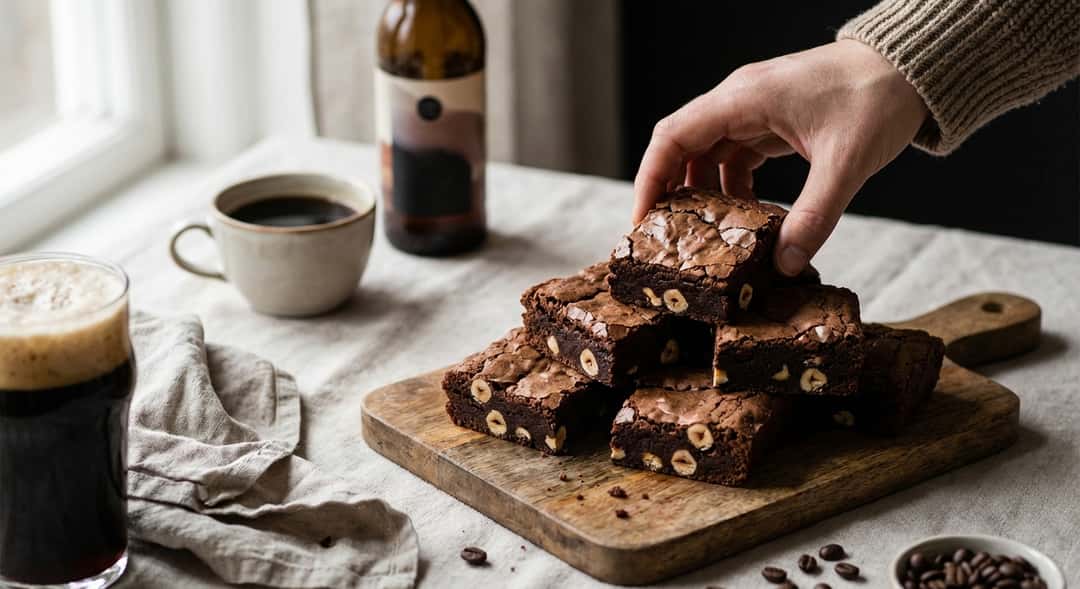
Brownies with coffee stout and hazelnuts
The third recipe is simpler, but no less impressive. Coffee stout – that is, stout brewed with coffee or coffee beans – gives brownies an extra coffee-like bitterness that balances the sweetness perfectly. De Tvende Deus ex Nihilo Imperial Coffee Stout is a Norwegian example with a powerful coffee character that works beautifully here, but any good coffee stout will do the job.
Ingredients
For approximately a 20×30 cm tin:
- 200 g dark chocolate (minimum 70%)
- 150 g butter
- 150 ml coffee stout
- 200 g sugar
- 3 eggs
- 100 g plain flour
- 1 tsp vanilla extract
- 100 g toasted hazelnuts, roughly chopped
- ½ tsp flaky salt
Method
- Preheat the oven to 180°C. Line the tin with baking paper.
- Melt the chocolate and butter over a bain-marie. Stir in the beer.
- Remove from the heat and stir in the sugar.
- Whisk in the eggs one at a time.
- Fold in the flour, vanilla, nuts and salt. Do not overmix.
- Pour into the tin and bake for 25–30 minutes. The brownies should still be slightly soft in the centre.
- Sprinkle with flaky salt while still warm.
Why does it work?
Beer – particularly dark beer – contains complex aromas from the malt, and the alcohol helps to release fats and amplify flavor. The carbonation also contributes to a lighter texture in the batter, in much the same way as milk or buttermilk does, but with far more personality. When the beer is heated or baked, much of the alcohol evaporates while the aromas remain.
It is not about tasting beer in the cake, but about using beer's taste profile – roasted, sweet, slightly bitter – as an ingredient on a par with vanilla or cinnamon. That is the difference between a cake that tastes flatly sweet and one that has depth, balance and something you cannot quite put your finger on.
So the next time you have a bottle of imperial stout or porter left over: don't throw it out. Pour it into a bowl, turn on the oven, and let the beer bottle become baked goods. It is time that dark beer got the place it deserves – on the cake plate too.