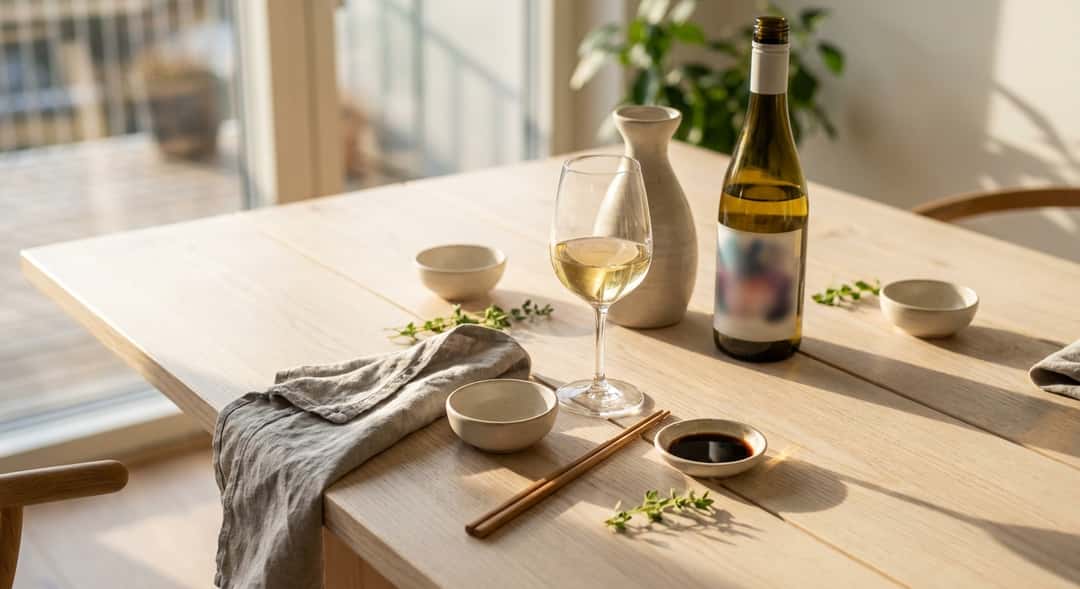

It is summer, it is the weekend, and someone has already lit the grill. Maybe the menu is inspired by Tokyo or Bangkok rather than Arendal and Ålesund – tataki, yakitori, miso-marinated salmon, or a round of sushi platters from the local grocery store. All of this is wonderful. But when you reach for the wine bottle, it is easy to miss the mark.
Asian food and wine is actually one of the drink world's most underrated pairings. It is simply a matter of knowing the rules – and knowing when you can break them.
Understand the taste profile first
First: what are we actually talking about? Asian food is not one thing. It is a continent of flavors. But there are some recurring elements that govern the wine choice:
- Umami – from soy sauce, miso, dashi, and fermented ingredients
- Acidity and freshness – lime juice, rice vinegar, ginger
- Heat – chili, wasabi, Sichuan pepper
- Sweetness – teriyaki sauce, hoisin, sweet chili sauce
- Smoke – from the grill and charcoal
Umami-rich dishes are the great challenger. They amplify bitterness in tannins, and can make dry red wines taste sharp and metallic. This is the main reason why a powerful Cabernet Sauvignon does not work as a universal solution here. The tannins and the umami intensity compete for attention – and neither of them wins.
The winner is almost always white wine
Fresh, aromatic white wine is your best friend at the Asian table. And at the top of the list reigns one grape variety above all others:
Riesling.
Riesling has a naturally high acidity that cuts through fat and rich umami. It can have a slight residual sweetness that tames the heat from chili and wasabi. It is aromatic enough to match ginger and citrus notes. And best of all – it is rarely too heavy.
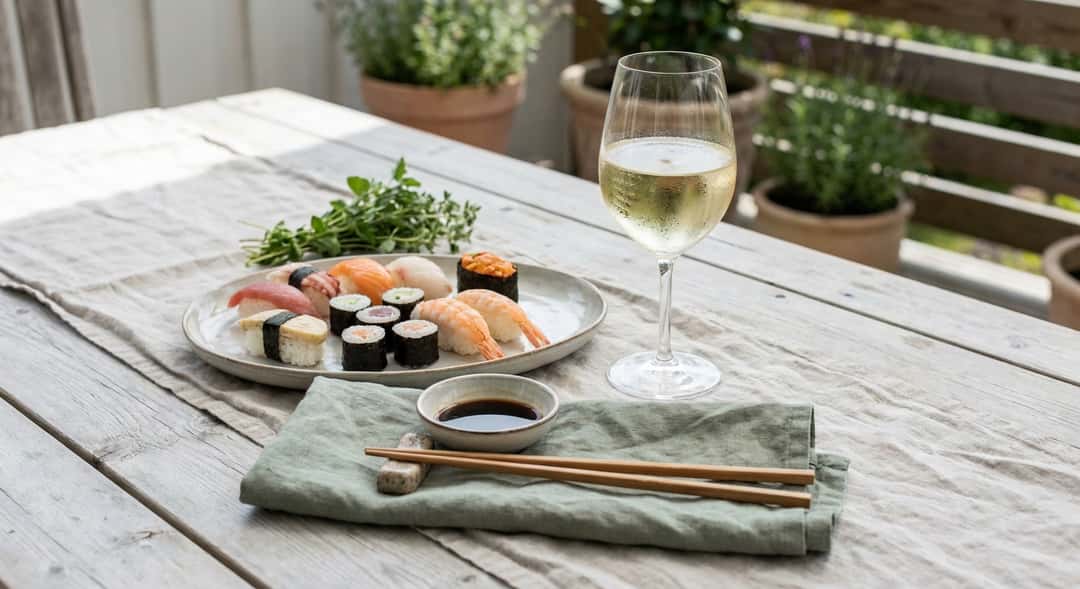
An off-dry German Riesling, for example a Spätlese from Mosel, is almost tailor-made for sushi. The mineral, slate-driven character plays with soy sauce in a way that feels almost magical. Martin Müllen Kröver Letterlay Riesling Spätlese 2005 is a fascinating choice in that direction – mature and complex, with low alcohol of just 7% and a honey-soft sweetness that balances wasabi's sting without overpowering the delicate flavors of the fish. Older Mosel Riesling also develops a characteristic petrol note that actually suits sushi surprisingly well.

Want something drier and more structured? An Alsace Riesling delivers more body and complexity. Albert Boxler JV Grand Cru Sommerberg Riesling 2013 is a wine with depth and precision – dry, with stone fruit, white flowers, and a long, mineral finish that holds up throughout the entire meal. It handles Asian grilled food with a bit more body well, such as yakitori skewers with teriyaki or grilled eel with a sweet glaze. The Sommerberg terroir in Alsace gives the wine a granitic crispness that is entirely unique.
Also worth mentioning is Knoll Riesling Loibner Smaragd 2024 from Wachau in Austria. The Smaragd classification means ripe grapes and a little more body, but the wine retains a razor-sharp freshness with apricot, peach, and herbal spice. A good choice against grilled seafood with Asian marinades or a miso-glazed cod.
White wine beyond Riesling
Riesling is not the only answer. Here are some other styles that work very well:
Gewürztraminer – Alsace's perfumed prima donna. Lychee, rose water, and ginger in the glass – and it suits Asian aromas like no other. Especially good with Thai-inspired food with coconut milk and galangal, or with a spicy red curry.
Grüner Veltliner – The Austrian white with its characteristic white pepper and herbal spice is incredibly flexible with Asian food. Fresh, dry, and always accommodating. A good Federspiel from Wachau is a safe and elegant all-rounder.
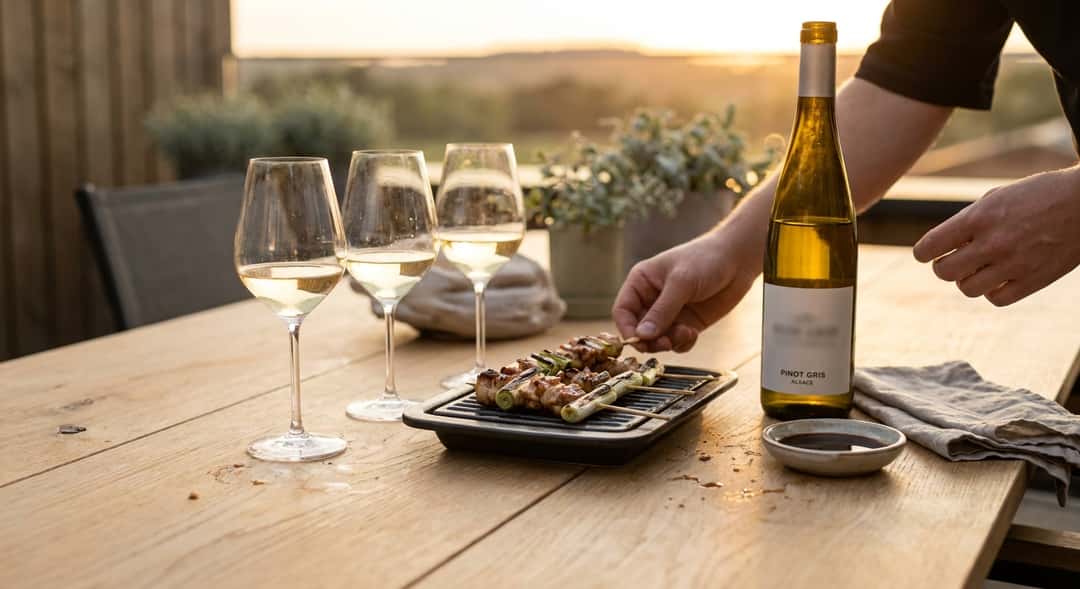
Pinot Gris from Alsace – a little fuller and more textural than Riesling. Works with richer dishes such as duck with hoisin sauce, spiced tempura, or a rich pho.
Dry Muscat – rarely seen, but fantastic with sushi and light Asian dishes. Floral and fresh without being sweet – a true secret among wine enthusiasts.
What about rosé and light red wine?
A dry, fresh Provence rosé is never wrong in summer, and it works well with milder sushi dishes and light noodle salads. Grenadine-fresh, with a restrained acidity and almost no tannin – that is exactly what is needed. Avoid overly powerful, fruity rosé – it can clash with umami in an unpleasant way.
Light red wine is possible, but demanding. Pinot Noir is the dish's saving grace here – light tannins, good acidity, and strawberry aroma that does not fight with soy sauce. Think Bourgogne rouge, a young Oregon Pinot, or a Spätburgunder from Baden. Serve lightly chilled, around 14–16 degrees, and it becomes even more accommodating.
Avoid: powerful Syrah, Cabernet Sauvignon, Malbec, and Amarone. Anything with lots of tannin and high alcohol will ring metallic against umami-rich food – that is not a taste experience you want.
Bubbles and beer – don't forget these
Champagne and crémant are actually fantastic with sushi. Fermentation bubbles cleanse the palate, the acidity matches soy sauce, and there is something genuinely festive about the combination. A brut blanc de blancs or a good crémant d'Alsace is a smart choice if you want to impress guests at the weekend table.
And beer? Yes, actually. A fresh, pale lager – preferably in a Japanese-inspired style – is a classic match for sushi and Asian grilled food for a reason. The bitterness cleanses the palate, the carbonation lifts the flavors, and it is unpretentious and crowd-pleasing. Great Divide Colette Farmhouse Ale is not a classic lager, but its Saison-like lightness and subtle fruity fermentation character make it surprisingly well suited to light Asian food. A little off the beaten track, but absolutely worth a try at the weekend grill table.
A quick summary: what works with what
- Sushi and sashimi → Off-dry Riesling, dry Muscat, brut Champagne
- Yakitori and Asian chicken grill → Alsace Riesling, Pinot Gris, light Pinot Noir
- Grilled salmon with miso → Grüner Veltliner, Alsace Riesling, Wachau Smaragd
- Thai with chili and coconut → Gewürztraminer, off-dry Riesling
- Peking duck and hoisin sauce → Full-bodied Pinot Gris, light red wine chilled
- Tempura → Bubbles, dry lager, fresh white wine with good acidity
Avoid these pitfalls
Too much oak. A powerful, oak barrel-aged Chardonnay can become clunky and heavy against delicate sushi flavors. Stick to stainless steel-fermented white wine or lightly handled styles.
Too much tannin. As mentioned – umami and tannins are not friends. The more powerful the red wine, the more metallic and bitter the combination will become.
Too high alcohol. Wines with 15% ABV are not made for light Asian food. It will burn in the mouth and overpower the fine nuances of the fish and spices.
Too sweet a wine. An off-dry Riesling is fine, but a dessert wine will make the sushi experience cloying and flat. Balance is everything.
The good news? The wines that work best with Asian food – fresh, aromatic white wine with good acidity and moderate alcohol – are also the wines that taste best in the summer sun. There is therefore no conflict between the practical and the delightful. Get out the Riesling, put it in the ice bucket, and let the grill do the rest.