
There is something almost poetic about a drink with roots thousands of years in the past that still manages to surprise. Sherry – the wine that for many decades was associated with grandmother's sweet glass bowl and dusty bottles in the sideboard – is in the process of undergoing a quiet revolution. And the foremost front line of that revolution is a glass of ice-cold Fino or Manzanilla in the summer sun.
Let us start with what truly makes this story exciting: Jerez de la Frontera in Andalucía, southern Spain. Here, between whitewashed bodegas and sun-scorched meadows covered in albariza soil – a chalk-white, mineral-rich earth that absorbs moisture like a sponge and reflects the sun's heat upward toward the grape clusters – the Palomino grape grows. A grape that in itself is quite anonymous, but which in the right hands and in the right barrels is transformed into something truly extraordinary.
What exactly are Fino and Manzanilla?
Fino and Manzanilla are both dry, pale sherry styles aged beneath a living layer of yeast called flor. This flor layer protects the wine from oxidation and gives it its characteristic freshness, nutty tone, and crisp acidity. Manzanilla comes exclusively from the small coastal town of Sanlúcar de Barrameda, where the sea breeze from the Atlantic gives the wine a light, saline, iodine-tinged character that is unmistakable. Fino is produced primarily in Jerez and El Puerto de Santa María.
The flor layer is the very key to everything. Think of it as the wine's guardian angel – a living, breathing carpet of yeast that floats on the surface of the barrels and keeps the fresh, delicate character intact. Without flor, the wine would oxidize and develop into Amontillado or Oloroso – delightful styles both, but an entirely different and more complex story.
| Style | Origin | Character | Served at |
|---|---|---|---|
| Fino | Jerez / El Puerto | Fresh, nutty, dry | 7–9 °C |
| Manzanilla | Sanlúcar de Barrameda | Saline, light, maritime | 6–8 °C |
Why is this the perfect summer aperitif?
Fino and Manzanilla are among the world's driest, lightest, and freshest wines – which makes them natural summer candidates. At around 15% alcohol they are stronger than ordinary white wine, but they are typically enjoyed in smaller quantities and always chilled down to an almost ice-cold temperature. That makes them highly refreshing on warm days, whether you are sitting on the terrace, by the sea, or on a summer evening with friends.
The crisp acidity, the mineral freshness, and the light bitterness that finishes the glass make them perfect "openers" for the taste buds – exactly as a good aperitif should work. They cleanse the palate, stimulate the appetite, and set the scene for what is to come. Compared to a sweetish prosecco or a heavy cocktail, this is something entirely different: elegant, direct, and genuinely refreshing.
Which bottles should you choose?
Here are some truly solid choices for the summer.
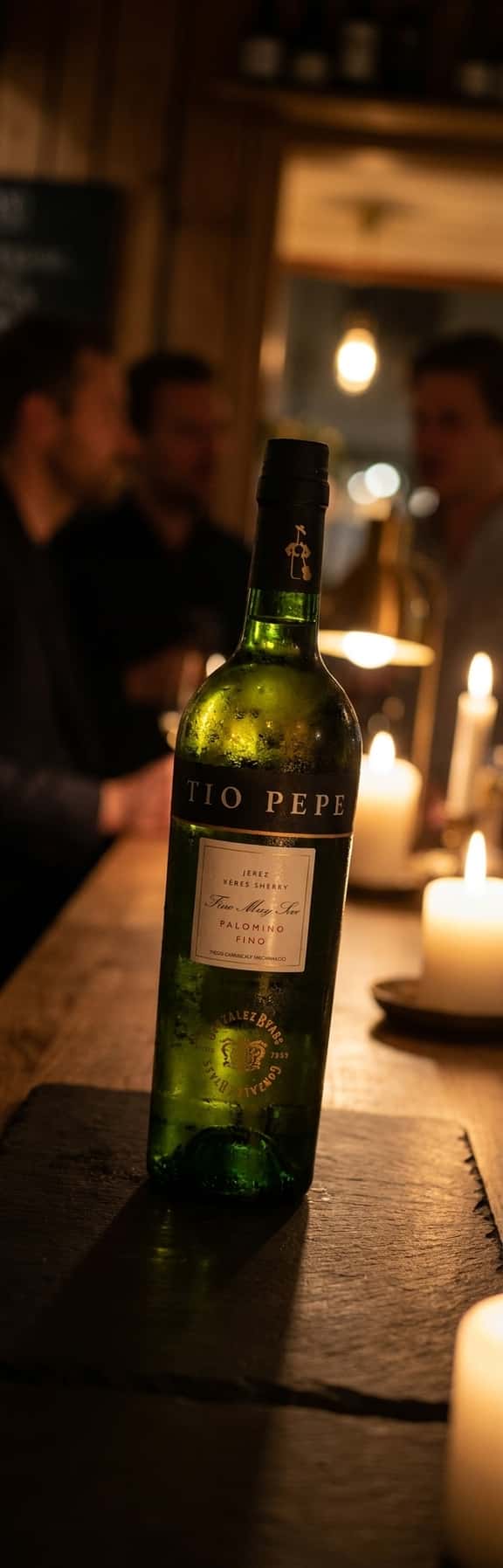
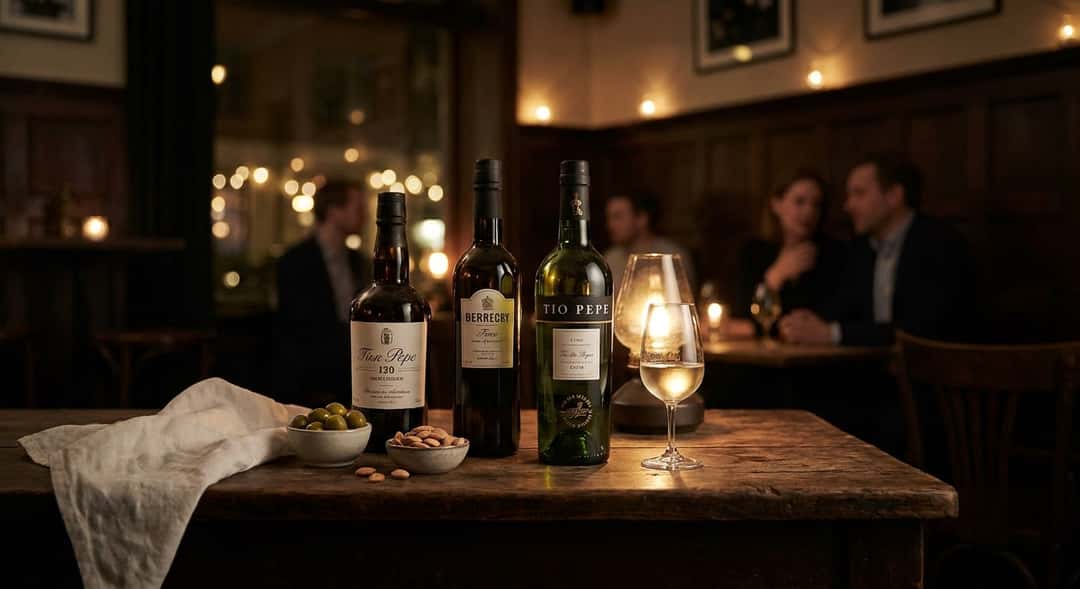
Tio Pepe Fino from González Byass is the icon itself – a global reference point for the style. It has a clean, fresh aroma of green apple, bread, and almond, with a sharp, appetite-whetting finish that almost calls for an olive on the side. It is a safe, classic entry point into the world of sherry, and the price is very reasonable.
For those who want something a little more artisanal and exciting, Valdespino Inocente Fino Single Vineyard Macharnudo Alto is a rare find. It comes from a single vineyard on the finest albariza ridges outside Jerez, and is aged in solera in oak barrels with the flor layer intact. The result is a fino with depth and complexity – nutty, creamy in texture, with a long and mineral aftertaste that is hard to forget.
If you want to experience the maritime Manzanilla style in its purest form, La Riva Manzanilla Fina Miraflores Baja is a brilliant choice. Produced in Sanlúcar de Barrameda, it bears a clear imprint of the sea – light, saline, and refreshing as a breeze from the Atlantic on an early summer morning.
And for the curious who want to explore the breadth of the style: Fernando de Castilla Classic Fino is a reliable, elegant fino that impresses with its purity and balance, at a price that makes it easy to buy two bottles.
How to serve it correctly
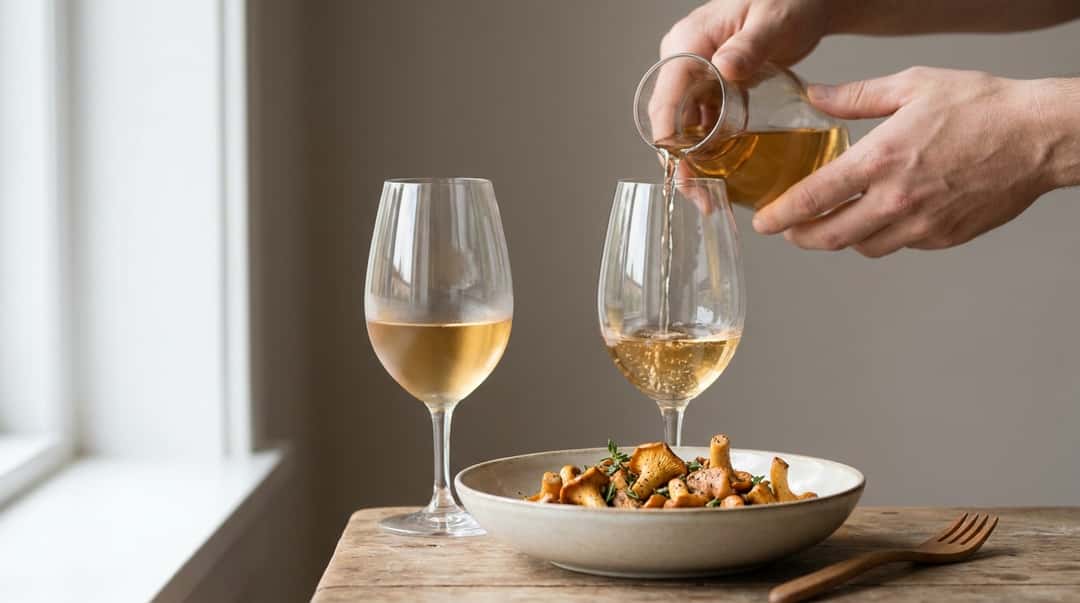
Temperature is everything with fino and manzanilla. These wines should be served ice-cold – ideally between 6 and 9 °C. Place the bottle at the back of the fridge the evening before, or take a shortcut with an ice bucket for 20 minutes.
The glass also makes a surprisingly big difference. Forget the small, funnel-shaped sherry glasses from the 1980s. Instead, use a standard white wine glass, preferably tulip-shaped, which gathers the aromas and lets the wine breathe. A copita – the traditional, slender Spanish sherry cup – is also perfect and gives the whole experience an authentic feel.
One important thing to remember: opened fino and manzanilla are perishable. Put the cork back, place the bottle in the fridge, and drink it within 2–3 days, a week at most.
What do you eat with it?
Spaniards know it instinctively: dry sherry and simple, salty snacks are an almost matrimonial combination. It does not need to be complicated – in fact, the simpler the better.
- Green olives – Manzanilla olives if possible (not a coincidence that they share a name with the wine!)
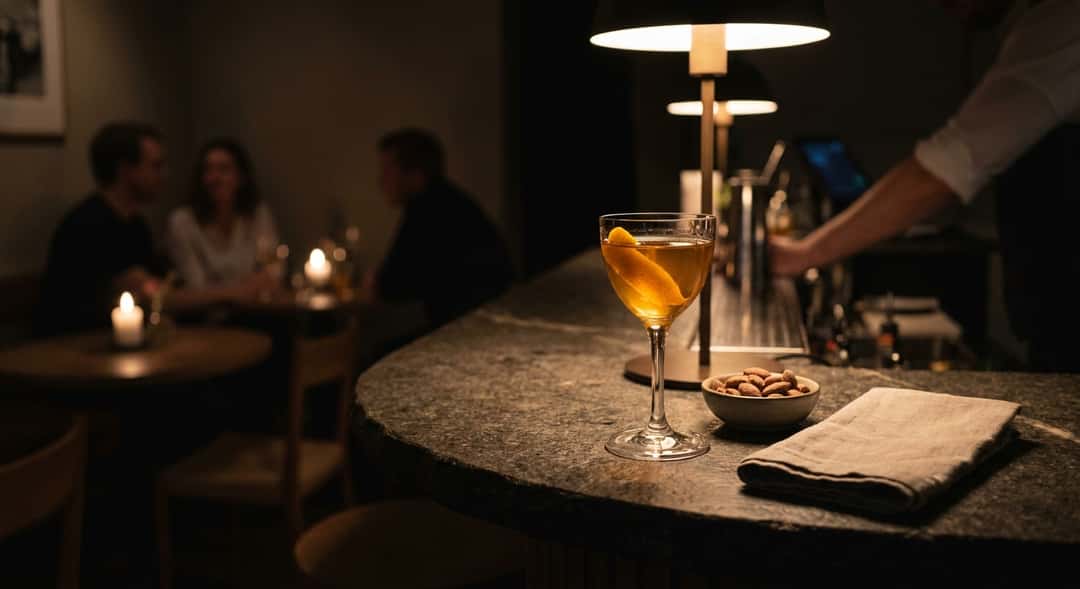
- Roasted almonds – preferably a little salty and warm from the pan
- Jamón ibérico – cured ham in thin slices, preferably served at room temperature
- Manchego – the nutty, semi-hard sheep's milk cheese matches the wine point for point
- Anchovies – salty, umami, and maritime depth; especially brilliant with Manzanilla
- White asparagus with aioli – for those who want to make it a little extra special on the terrace
The great thing about these combinations is that they are easy to put together whether you are at home, by the sea, or on a summer evening with friends. Sherry requires no culinary training – just a good olive and good company.
Is sherry expensive?
Not at all. It is actually one of sherry's great secrets and pleasures. For the money you spend on a good fino, you get a wine experience that competes with wines at twice the price. Much of this is because sherry is still underrated on the world market – which is sad for the dedicated producers in Jerez, but a hidden advantage for those of us who have already discovered the joy.
So next time you are planning a summer party, a beach day, or simply a Friday afternoon on the terrace: skip the prosecco just once, and chill a bottle of fino instead. It may be the most sophisticated simple choice you can make this summer.
Cheers – or as they say in Jerez: ¡Salud!