
There are wines that never quite receive the recognition they deserve outside their home country. Lambrusco is one of them. In Emilia-Romagna – the food region that has also given the world prosciutto di Parma, Parmigiano Reggiano, and aceto balsamico – this is the everyday wine. Not a celebration wine. Not a status wine. Just the wine you pour into the glass when it is warm, the food is good, and the company is even better.
And that is precisely where the secret lies.
What exactly is Lambrusco?
Lambrusco covers several related grapes and different appellations. Here are three wine styles to know; Reggiano is an appellation, not a separate grape variety.
- Lambrusco di Sorbara – the finest and lightest style. Light cherry-red colour, floral aroma, high acidity, and a refreshing, lightly sparkling texture. This is the elegant sister of the family.
- Lambrusco Grasparossa di Castelvetro – deeper, more powerful, and more tannic. Dark berries, a hint of bitter chocolate, and a robustness that can stand up to a juicy piece of meat.
- Lambrusco Reggiano – the most widely produced style, and often the one we remember from the sweet bottles of the 1980s. Can range from dry to sweet, and this is where the variation is greatest.
The most important distinction to understand is secco (dry) versus amabile/dolce (off-dry to sweet). It was the sweet versions that dominated the export market in the decades after the war – including the notorious Riunite wave that swept through America in the 1970s and 80s. But modern Lambrusco has risen sharply in quality, and dry styles from serious producers are something else entirely.
Method and magic
Most Lambrusco wines are made using the Charmat method – also known as metodo italiano or martinotti – where the second fermentation takes place in a pressurised steel tank rather than in the bottle. It is faster than the traditional method, but it is not meant as a shortcut. It is a deliberate choice to preserve the fresh, fruity character that makes Lambrusco exactly what it is.
The result is a wine with moderate bubbles, fresh acidity, and an alcohol level that typically sits between 10.5 and 12.5 percent. Serve it chilled – around 10–12 degrees – and drink it young. Lambrusco is not something to cellar; it is a wine that celebrates the moment.
Some producers also experiment with rifermentazione in bottiglia – natural re-fermentation in the bottle – which gives more complexity and a finer, more uneven bubble quality. These wines can resemble pét-nat and tend to appeal to natural wine enthusiasts looking for something outside the ordinary.
Why does it suit a Norwegian summer?
Imagine a warm June evening. The grill is lit, there are sausages and chicken skewers on the rack, and someone has made a tangy coleslaw. What do you want in your glass?
A heavy Barolo? A warm Shiraz? Hardly. You want something light, chilled, and with enough fruitiness to complement the smoky aroma without overpowering it.
Lambrusco’s acidity and bubbles provide a fresh contrast to grilled sausages and burgers, while its fruit character can complement smoky flavours.
In Italy they say that Lambrusco came into being to match the food from the same region – and that region is known for having one of Europe's richest cuisines. Aceto balsamico, rich ragùs, and fatty antipasti: all of this is united with Lambrusco's acidity and bubbles in a way that seems almost magical. It is not a coincidence. It is geography and gastronomic logic in perfect harmony.
Three bottles worth knowing
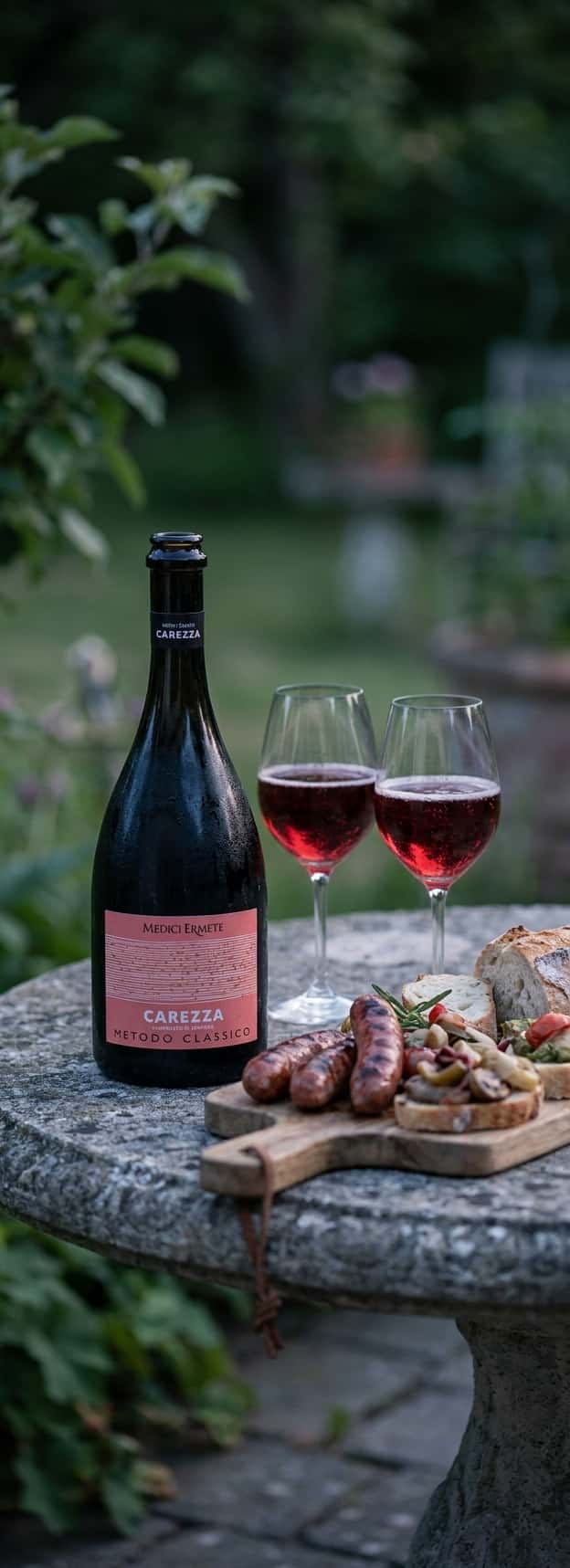
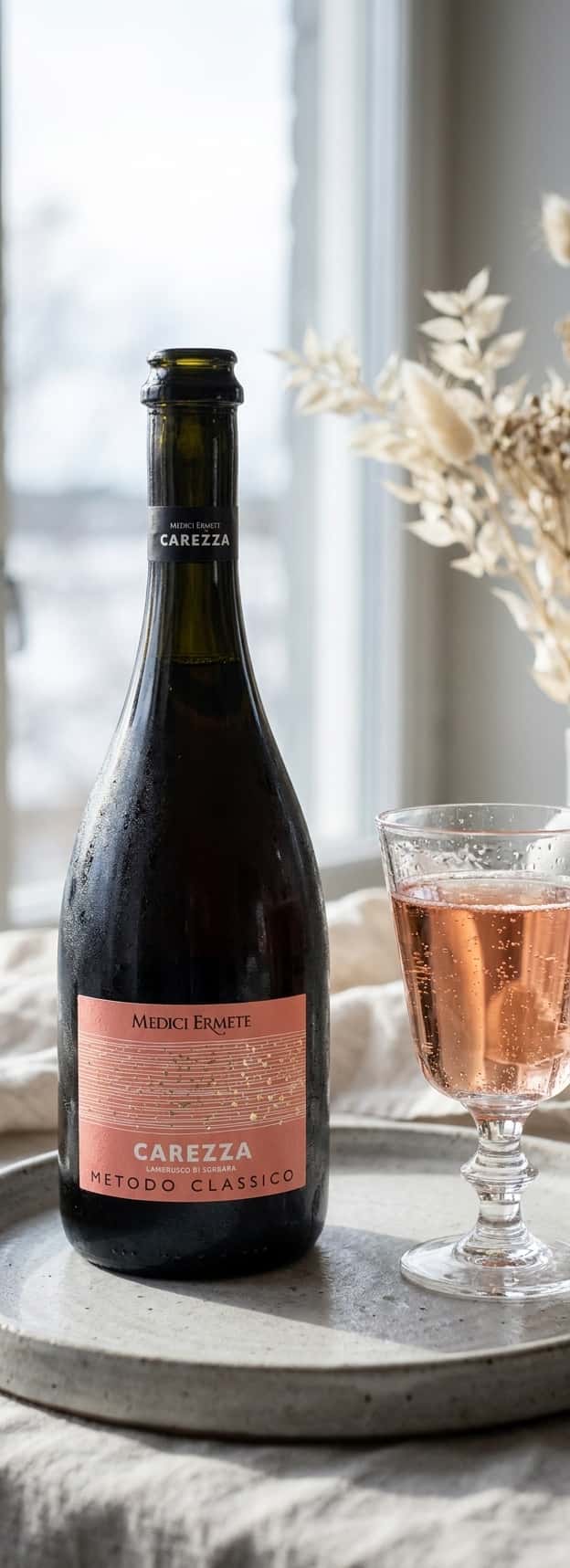
Medici Ermete Carezza Lambrusco di Sorbara is a safe and excellent starting point for the curious. Medici Ermete is one of the region's most respected producers, and Carezza – which means "caress" in the local dialect – is made in the elegant Sorbara style. Light ruby-red with a pink hue, aromas of wild rose and fresh red berries, and a dry, refreshing finish with fine acidity. This is Lambrusco as it is meant to be tasted: light, floral, and immediately enticing. Serve it with a simple antipasti platter or as an aperitif while the grill is warming up.
For those who want a little more body and character, Villa di Corlo Lambrusco Grasparossa di Castelvetro Corleto is a natural next step. The Grasparossa style gives deeper colour, denser tannins, and more concentrated fruit – dark cherries, blackberries, and a hint of bitter chocolate in the finish. This is the wine for juicy grilled ribs, a dark chorizo, or a good homemade meat sauce. Villa di Corlo is a family estate with roots going back to the 1600s, and they grow the Grasparossa grape in the calcium-rich clay soils around Castelvetro – a terroir that gives the wine its characteristic depth.
Villa di Corlo has also produced an exciting variant in Villa di Corlo Lambrusco di Sorbara Elettra Spumante Brut Rosé – a brut rosé in spumante style that combines Sorbara's elegance with a drier, more precisely structured profile. Light salmon colour, fine precise bubbles, and a fresh, floral character with hints of strawberry and citrus peel. It works equally well as an aperitif as it does with a light summer salad with feta cheese and watermelon.
| Wine | Style | Character | Pairs with |
|---|---|---|---|
| Medici Ermete Carezza Sorbara | Dry, light | Floral, red berries | Antipasti, light grilled food |
| Villa di Corlo Grasparossa Corleto | Dry, medium | Dark berries, chocolate | Grilled ribs, chorizo |
| Villa di Corlo Elettra Brut Rosé | Brut, fresh | Floral, citrus, strawberry | Aperitif, salads |
The most important rule: serve it cold
This cannot be stressed enough. Lambrusco served too warm is a disappointment. It loses its freshness, the bubbles disappear, and the fruit seems heavy and cloying. Put it in the refrigerator for at least two hours before opening, and make sure the glass is cool.
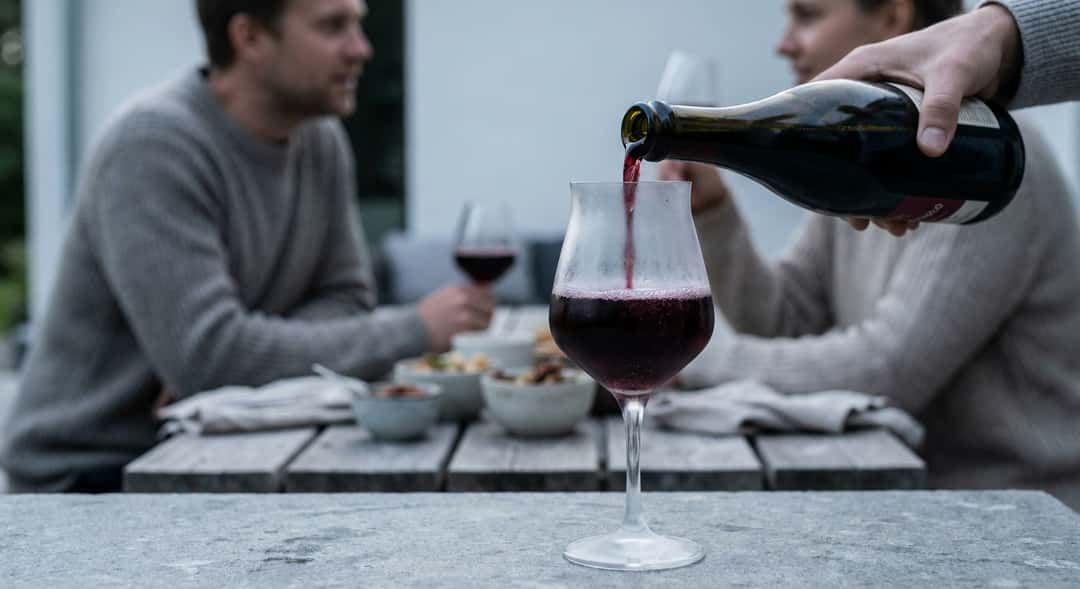
A narrow tulip-shaped flute works excellently – it preserves the bubbles and concentrates the aromas. Avoid wide red wine glasses; they let too much of what makes Lambrusco Lambrusco escape.
And never forget that this is a wine made to be drunk now – not cellared. The best vintage is the one in your glass tonight, ideally with friends, glowing coals, and a long Italian evening meal ahead of you.
The Italians knew it all along. Now it is our turn.