
There's something about September that makes white wine change character. Summer's crisp, tart glasses are gradually replaced by something rounder and more concentrated – wines that have had a bit more sun, a bit more ripe fruit, and often a bit more alcohol and body. It's easy, then, to forget the fruit that actually belongs on the autumn table: the pear.
The apple gets all the attention when the leaves start to fall, but the pear is the one that really challenges the wine in an interesting way. Where the apple is often straightforwardly tart or sweet, the pear has a softer, more perfumed sweetness and an acidity that sits deeper – more background than foreground. That makes it a surprisingly good conversation partner for wines that might otherwise become a bit heavy and one-dimensional toward the end of the season.
A ripe fruit always reveals whether a wine has substance or just volume.— INGRID IMPORTØR
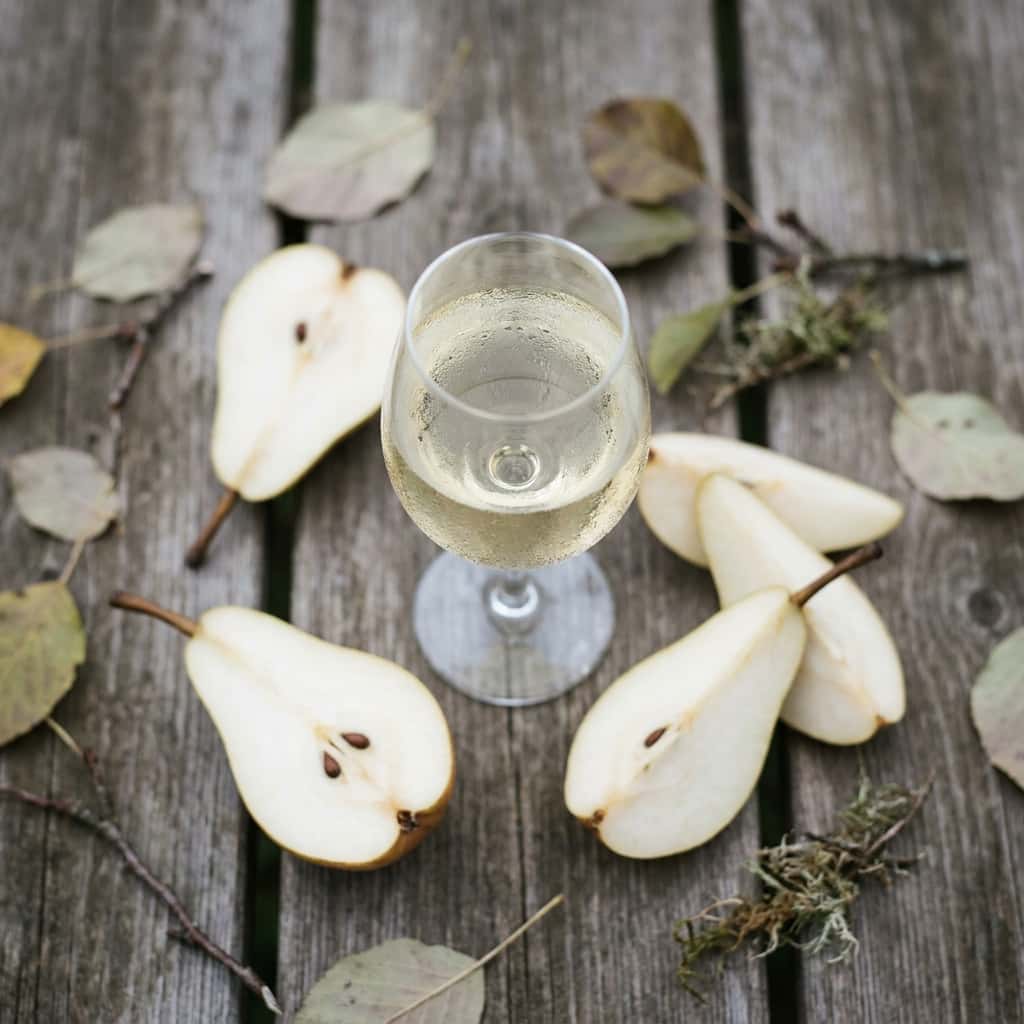
Why pear works with full-bodied white wine
Many think that fuller white wines – those with a bit of barrel aging, a bit of oxidative character or higher alcohol – need heavy food to balance them. But often it's the opposite: a rich sauce or fried meat can drown out the finer nuances in the wine. Fruit, on the other hand, works with the wine rather than against it.
The pear's natural sweetness often mirrors the ripe fruit character found in wines made from grapes like chenin blanc, which often carry notes of quince, honey and yellow fruit even when the wine is dry. The acidity in the pear – which is milder and less sharp than in the apple – lets the wine's own acidity work undisturbed, instead of competing with it.
That's why the Anjou area in the Loire Valley is a natural place to look for matches. Here chenin blanc is grown on slate and volcanic soil that gives the wines a stony, almost salty undercurrent beneath the fruit sweetness – exactly the combination that mirrors a good pear. Many of the producers in the area have practiced biodynamic or low-intervention farming for generations, which gives the wines a clear sense of place – terroir, as the French call it.
The varieties that make a difference
Not all pears are alike. If you want to make a proper autumn pairing, it's worth thinking about which variety you choose:
- Conference: The most everyday and widely available variety in Norwegian stores. Firm flesh, moderate sweetness and a lightly spiced undertone. Pairs well with wines that have a bit of body but aren't too sweet themselves.
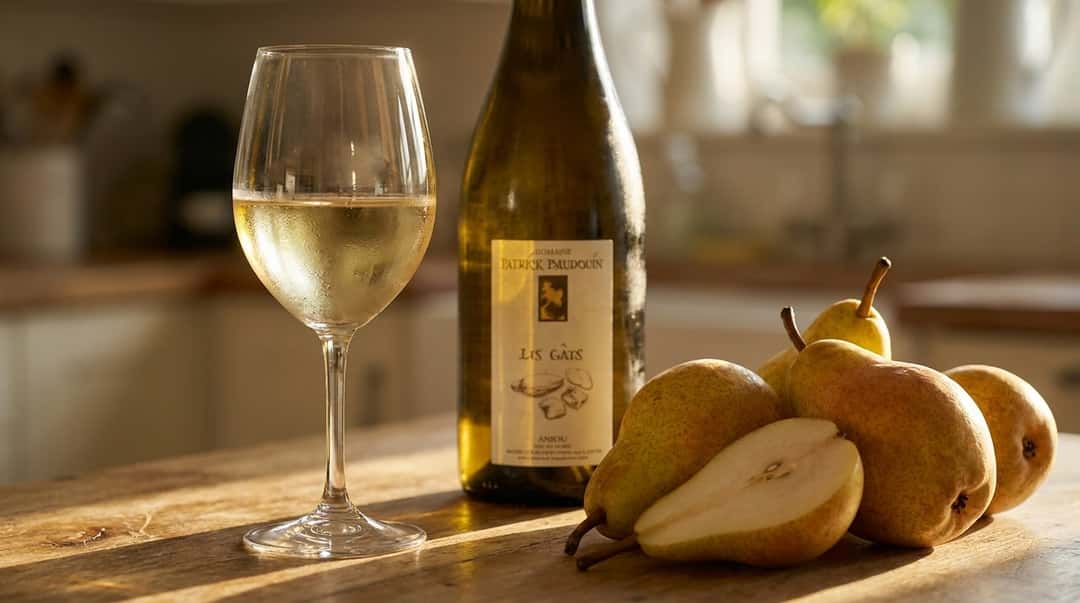
- Anjou pear (or Beurré d'Anjou): Buttery, juicy and aromatic, with a sweetness that can almost recall pear juice. Works excellently with wines that themselves have an oily, round texture.
- Comice: Perhaps the most "wine-friendly" of all – very aromatic, sweet and soft. Best alongside wines that have their own sweetness or a distinct fruity profile, ideally off-dry wines or wines with a bit of residual sugar.
- Williams/Bartlett: Crisper and more tart than the others. This one can better handle wines with higher acidity, like a fresh riesling.
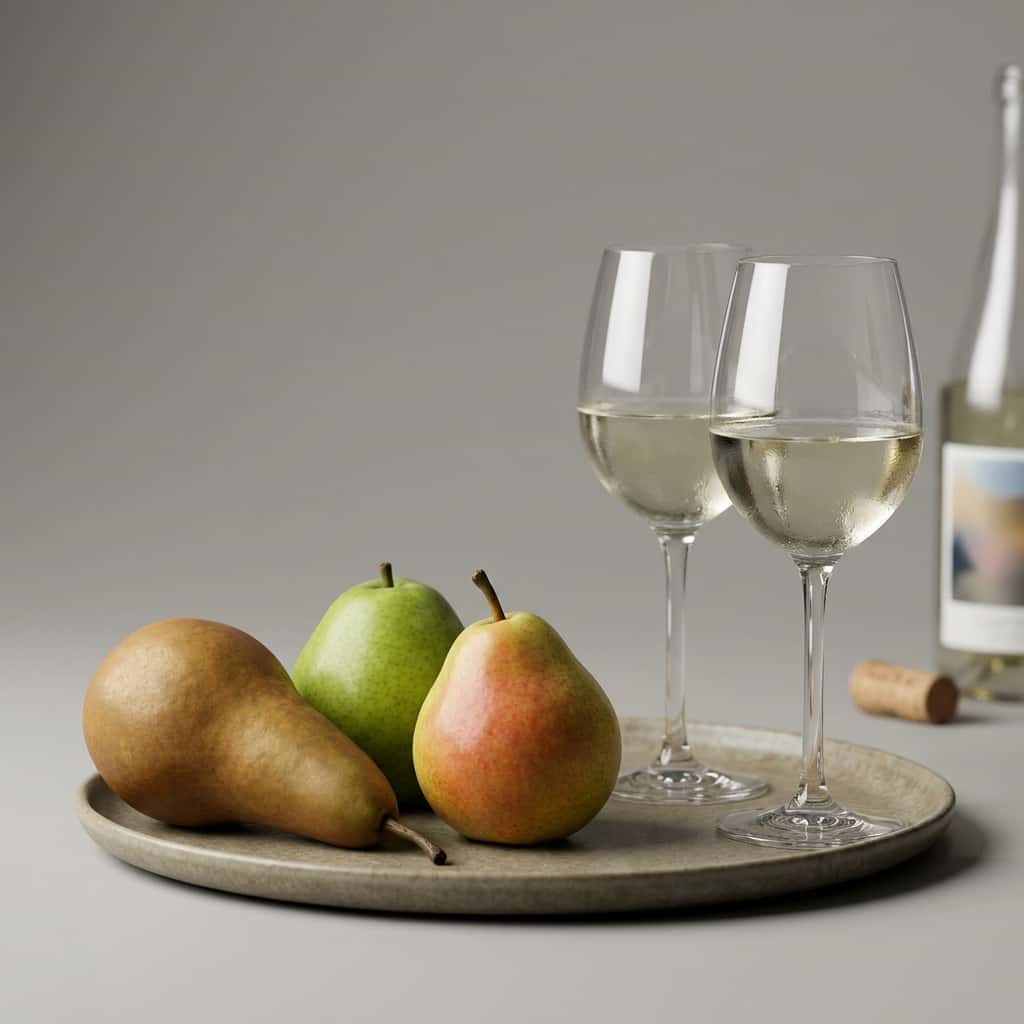
Concrete suggestions for the autumn table
If you want to put together a simple autumn platter with pear, cheese and wine, chenin blanc from Anjou is a natural starting point. Patrick Baudouin Les Gâts Anjou Blanc 2017 (ID: 2144501) is a good example of how far these wines can go with a bit of age – it has had time to develop honey and quince tones that play right into a ripe Anjou pear's buttery character. Serve it at room temperature, ideally with a piece of blue cheese and slices of pear on the side.
If you want something a bit younger and fresher, Charles Eusebe Anjou Chenin Blanc 2025 (ID: 17136601) is a fine alternative. It's lighter on its feet, with distinct citrus and apple notes alongside the characteristic chenin fullness – perfect alongside a firm Conference pear cut into thin slices, perhaps together with a slice of parmesan.
For those who want to try something more mineral and structured, Dom. Belargus Anjou Quarts 2021 (ID: 19661501) is worth seeking out. This wine comes from one of the more well-known single vineyards in Anjou, with slate soil that gives a salty, almost chalky undercurrent behind the fruit sweetness. It's a good choice for a Comice pear served with a mild goat cheese – the contrast between the wine's minerality and the pear's sweet, soft flesh is exactly the kind of tension that makes a good wine-and-food pairing memorable.
If you feel like reaching a bit further, Dom. Belargus Anjou Treilles 2020 (ID: 19661601) may also be worth exploring – a wine with even more concentration and aging potential, which can nicely accompany an entire autumn meal from a starter with pear and walnuts to a main course with light mushrooms and poultry.
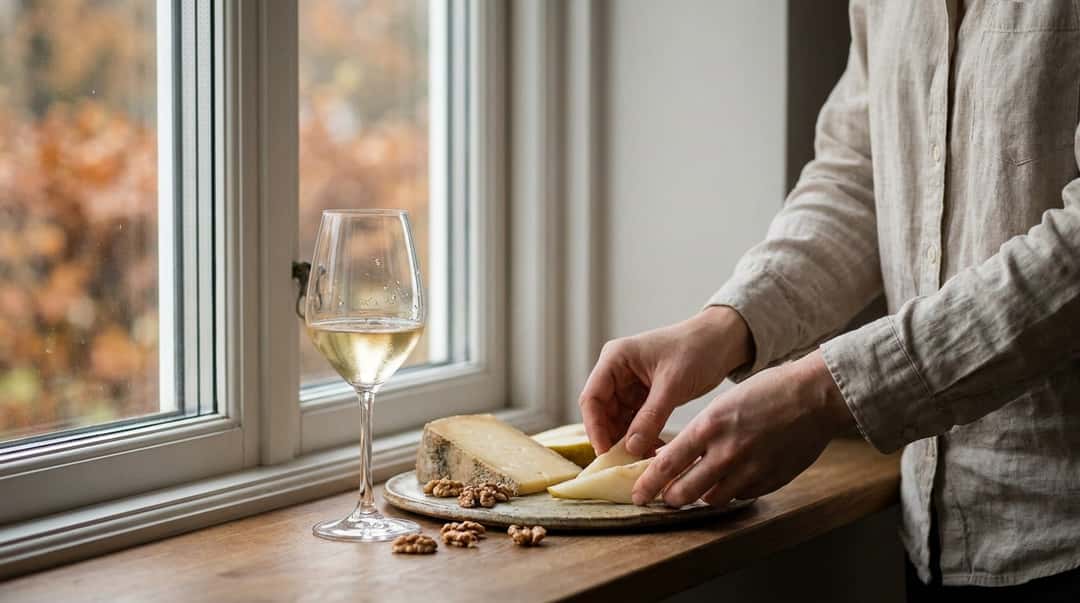
Simple ways to test it yourself
You don't need to make anything complicated to experience this interplay. A simple autumn platter with:
Ingredients
- 2–3 pear varieties, in slices
- 1 mild cheese (e.g. brie or camembert)
- 1 stronger cheese (e.g. blue cheese or aged goat cheese)
- 1 handful of walnuts or hazelnuts
- 1 glass of Anjou white wine per person, at room temperature or lightly chilled
Method
- Cut the pears into thin wedges right before serving, ideally with the skin on for color contrast.
- Set the cheeses out at room temperature at least 30 minutes before serving, so the aromas open up.
- Toast the nuts lightly in a dry pan for extra depth, and let them cool.
- Arrange the pear, cheese and nuts together on a platter, and pour the wine alongside.
- Taste the pear alone first, then the wine alone, and finally together – note the difference.
This simple exercise is enough to discover how well the fruit's own sweetness and acidity can highlight the wine's character, without needing to think too hard about the "right" combination.
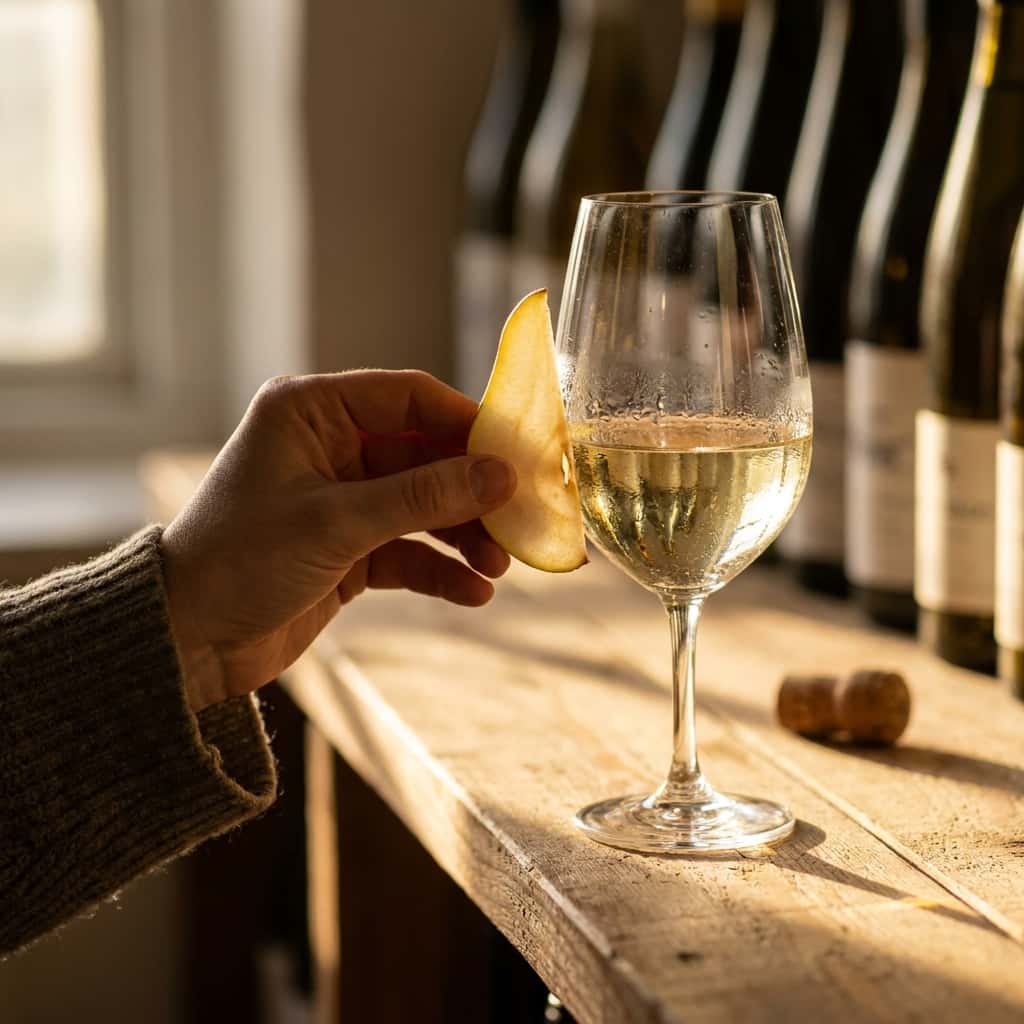
The pear has always been there, a bit in the shadow of the apple and the orange when autumn comes. But given a place beside a full-bodied, ripe white wine from Anjou or similar areas, it proves itself one of autumn's most underrated companions in the glass – calm, aromatic, and just tart enough to keep the wine on its toes.</content>
<parameter name="featuredImageAlt">Full-bodied white wine from the Anjou region finds its perfect match in sweet and juicy pears, served in cozy autumn light